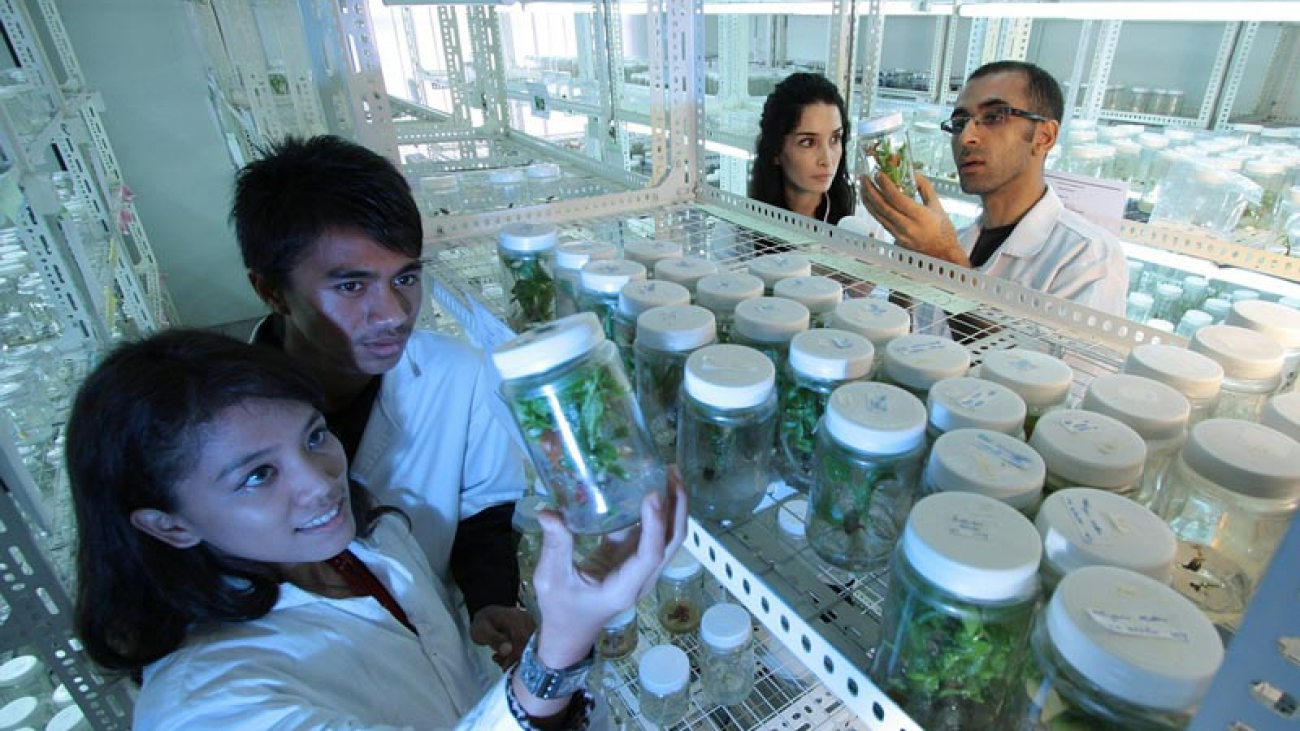
laboratory-385349_1280

Botanical

Sport or sports are all forms of usually competitive physical activity or games which, through casual or organised participation, aim to use, maintain or improve physical ability and skills while providing enjoyment to participants, and in some cases, entertainment for spectators. Usually the contest or game is between two sides, each attempting to exceed the other. Some sports allow a tie game; others provide tie-breaking methods, to ensure one winner and one loser.
A number of such two-sided contests may be arranged in a tournament producing a champion. Many sports leagues make an annual champion by arranging games in a regular sports season, followed in some cases by playoffs. Hundreds of sports exist, from those between single contestants, through to those with hundreds of simultaneous participants, either in teams or competing as individuals. In certain sports such as racing, many contestants may compete, each against all with one winner.

Records of performance are often kept, and for popular sports, this information may be widely announced or reported in sport news. Sport is also a major source of entertainment for non-participants, with spectator sport drawing large crowds to sport venues, and reaching wider audiences through broadcasting. Sports betting is in some cases severely regulated, and in some cases is central to the sport.

According to A.T. Kearney, a consultancy, the global sporting industry is worth up to $620 billion as of 2013. The world’s most accessible and practised sport is running, while association football is its most popular spectator sport.

chef-939437_1280

Hospitality

Sport or sports are all forms of usually competitive physical activity or games which, through casual or organised participation, aim to use, maintain or improve physical ability and skills while providing enjoyment to participants, and in some cases, entertainment for spectators. Usually the contest or game is between two sides, each attempting to exceed the other. Some sports allow a tie game; others provide tie-breaking methods, to ensure one winner and one loser.
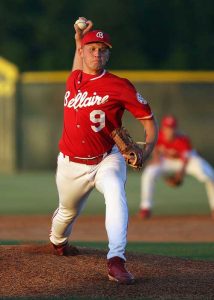
A number of such two-sided contests may be arranged in a tournament producing a champion. Many sports leagues make an annual champion by arranging games in a regular sports season, followed in some cases by playoffs. Hundreds of sports exist, from those between single contestants, through to those with hundreds of simultaneous participants, either in teams or competing as individuals. In certain sports such as racing, many contestants may compete, each against all with one winner.

Records of performance are often kept, and for popular sports, this information may be widely announced or reported in sport news. Sport is also a major source of entertainment for non-participants, with spectator sport drawing large crowds to sport venues, and reaching wider audiences through broadcasting. Sports betting is in some cases severely regulated, and in some cases is central to the sport.

According to A.T. Kearney, a consultancy, the global sporting industry is worth up to $620 billion as of 2013. The world’s most accessible and practised sport is running, while association football is its most popular spectator sport.

science

Science

Sport are all forms of usually competitive physical activity or games which, through casual or organised participation, aim to use, maintain or improve physical ability and skills while providing enjoyment to participants, and in some cases, entertainment for spectators. Usually the contest or game is between two sides, each attempting to exceed the other. Some sports allow a tie game; others provide tie-breaking methods, to ensure one winner and one loser.

A number of such two-sided contests may be arranged in a tournament producing a champion. Many sports leagues make an annual champion by arranging games in a regular sports season, followed in some cases by playoffs. Hundreds of sports exist, from those between single contestants, through to those with hundreds of simultaneous participants, either in teams or competing as individuals. In certain sports such as racing, many contestants may compete, each against all with one winner.

Records of performance are often kept, and for popular sports, this information may be widely announced or reported in sport news. Sport is also a major source of entertainment for non-participants, with spectator sport drawing large crowds to sport venues, and reaching wider audiences through broadcasting. Sports betting is in some cases severely regulated, and in some cases is central to the sport.

According to A.T. Kearney, a consultancy, the global sporting industry is worth up to $620 billion as of 2013. The world’s most accessible and practised sport is running, while association football is its most popular spectator sport.

testimonial-icon2

Our Community

We have huge community of blogger who love to change the world with us and help each other succeed.

testimonial-icon1

Future Students

If you believe that you can win the world with your blogging skills then you can surely be our future student.

students-1807505_1920

Discover your future with us

Education is the process of facilitating learning, or the acquisition of knowledge, skills, values, beliefs, and habits. Educational methods include storytelling, discussion, teaching, training, and directed research. Education frequently takes place under the guidance of educators, but learners may also educate themselves. Education can take place in formal or informal settings and any experience that has a formative effect on the way one thinks, feels, or acts may be considered educational. The methodology of teaching is called pedagogy.

Education is commonly divided formally into such stages as preschool or kindergarten, primary school, secondary school and then college, university, or apprenticeship. A right to education has been recognized by some governments, including at the global level: Article 13 of the United Nations‘ 1966 International Covenant on Economic, Social and Cultural Rights recognizes a universal right to education. In most regions education is compulsory up to a certain age.

africa-21787_1920

Everest Base Camp Trek

Everest Base Camp is either of two base camps on opposite sides of Mount Everest (It could also be any Everest base camp on given route, but this is less common since the two main routes became standardized). South Base Camp is in Nepal at an altitude of 5,364 metres (17,598 ft) (28°0′26″N 86°51′34″E), and North Base Camp is in Tibet at 5,150 metres (16,900 ft)(28°8′29″N 86°51′5″E). These camps are rudimentary campsites on Mount Everest that are used by mountain climbers during their ascent and descent. South Base Camp is used when climbing via the southeast ridge, while North Base Camp is used when climbing via the northeast ridge.

Supplies are shipped to the South Base Camp by sherpas or porters, and with the help of animals, usually yaks. The North Base Camp has vehicle access (at least in the summer months). Climbers typically rest at base camp for several days for acclimatization to reduce the risks and severity of altitude sickness. Climbers who complete treks like Annapurna, tend to tackle Everest.

South Base Camp in Nepal

Short Rest on Everest Base Trail
The Everest Base Camp trek on the south side is one of the most popular trekking routes in the Himalayas and is visited by thousands of trekkers each year. Trekkers usually fly from Kathmandu to Lukla to save time and energy before beginning the morning trek to this base camp. However, trekking to Lukla is possible. There are no roads from Kathmandu to Lukla and as a result, the only method of transporting large and heavy goods is by plane.

In 2015, it was noted that about 40,000 people per year take the trek from the Lukla airport to the Nepal Everest Base Camp.

Everest Base Trek Route Map from Nepal side

Everest Base Camp Trek is considered one of the best treks in Nepal. From Lukla, climbers trek upward to the Sherpa capital of Namche Bazaar, 3,440 metres (11,290 ft), following the valley of the Dudh Kosi river. It takes about two days to reach the village, which is a central hub of the area. Typically at this point, climbers allow a day of rest for acclimatization. They then trek another two days to Dingboche, 4,260 metres (13,980 ft) before resting for another day for further acclimatization. Another two days takes them to Everest Base Camp via Gorakshep, the flat field below Kala Patthar, 5,545 metres (18,192 ft) and Mt. Pumori.

On 25 April 2015 an earthquake measuring 7.8 Mw struck Nepal and triggered an avalanche on Pumori that swept through the South Base Camp. At least 19 people were said to have been killed as a result. Just over two weeks later, on May 12, a second quake struck measuring 7.3 on the moment magnitude scale. Some of the trails leading to Everest Base Camp were damaged by these earthquakes and needed repairs.
A temporary tent platform on the Khumbu glacier at South EBC, Nepal. Note the ice layer under the unstable rock surface. The Khumbu Icefall is seen in the background.

Nepal’s EBC bottom left, Khumbu icefall to the right

Khumbu icefall

Everest Base Camp

chuck-p-todd-williamson-nymag

Harry Superbrain

The Education Here is Amazing. Professor are very helpful .Thank you for  my degree. I use it for several of the reasons other people mention. My favorite use, however, is deciding where my work colleagues and I will go to lunch every Thursday. This thing is getting better and better as I learn more about it.